Okay, let's be honest, the world of meme coins has become a bit of a… circus. A chaotic, often scam-filled circus. You’ve got tokens popping up faster than you can say "rug pull," and trying to find a project with actual staying power feels like searching for a needle in a haystack. But what if someone actually tried to build a safer, saner space for meme coin enthusiasts? That's the promise of America.Fun, a new Solana-based launchpad, and it’s got me thinking... could this be the start of something truly revolutionary?
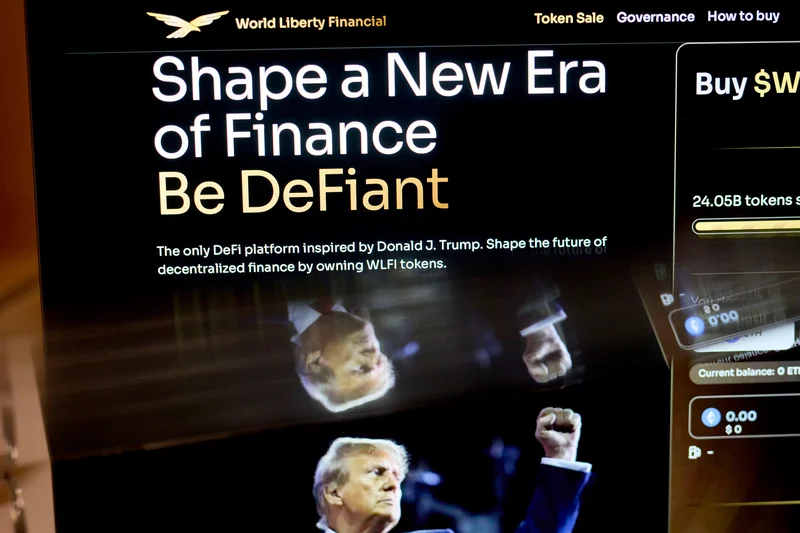
America.Fun is the brainchild of World Liberty Financial’s Ogle. The core idea? To create a "walled garden" in the otherwise lawless landscape of meme coins. It's a direct response to the rampant spam, scams, and, let's face it, sometimes downright offensive content that plagues platforms like Pump.Fun. Ogle is aiming for a middle ground, a space where creativity can flourish without turning into a breeding ground for chaos. He gets that the current free-for-all launchpads are a problem and that a little friction, like a small fee to launch a token, can go a long way in discouraging the bot armies and copycat scams. It's like adding a bouncer to the party – suddenly, things get a little more civilized.
The platform is taking a two-pronged approach: fees and curation. Requiring creators to pay a small fee (around $20 in AOL tokens) to launch a token may seem minor, but it's a clever deterrent to mass deployments of spam and scams. More importantly, America.Fun restricts duplicate tickers. On Pump.Fun, you'll often see dozens of imitations of a trending token appear within minutes, making it impossible to know which one is real. America.Fun only allows one token name to exist at a time, providing clarity and reducing the risk of being duped.
But here's where it gets really interesting: America.Fun is actively curating its frontend. Offensive or scam tokens might still exist on-chain, but they won't be featured on the platform's interface or trending lists. Ogle compares it to the early days of America Online, where safeguards were in place to prevent racism and abuse. It's a bold move, essentially saying, "We're not going to let the worst elements of the internet define our platform." As one article notes, World Liberty Advisor’s Token Launchpad Challenges Pump.Fun, directly challenging the status quo of existing platforms.
Now, I know what some of you are thinking: "Curation? That sounds like censorship!" And it’s a valid concern. Where do you draw the line between protecting users and stifling creativity? How do you ensure that the curation process is fair and transparent? These are questions that America.Fun will need to address as it grows. But the potential benefits – a safer, more welcoming environment for newcomers, a reduction in scams and offensive content – are too significant to ignore. It’s like the early days of the internet all over again, we need that human touch to make it a place for good.
The platform's native token, AOL, launched in early September, and while it's down from its peak, it's still showing signs of life. Ogle claims the project has gained 39,000 active users in the past 30 days and 222,000 page views, with significant traction in Asia. These numbers are unverified, but they suggest that America.Fun is gaining momentum.
However, America.Fun faces an uphill battle. The launchpad market is already crowded, dominated by established players like Pump.Fun and LetsBonk.Fun. And America.Fun's decision to pair all new tokens initially against USD1, rather than the more widely used USDC, could limit accessibility. Ogle argues that this is intentional, designed to support USD1's liquidity. But will it be enough to attract users in a market that prizes flexibility? We need to ask ourselves, is this move innovative or a potential bottleneck? What if prioritizing USD1 limits accessibility and hinders the very growth they seek?
America.Fun represents an ambitious experiment. It's a launchpad that wants to clean up a chaotic market without killing its energy. It's a bold vision, but it's one that I believe is worth pursuing. The internet was never meant to be a free-for-all of scams and toxicity. It was meant to be a place where people could connect, create, and share ideas. America.Fun is trying to recapture that original spirit, to build a space where meme coins can be fun and engaging without being dangerous. When I think about it, it reminds me of the early days of the app store. Remember when everyone thought it was just a place for silly games? Now look at it – it's a multi-billion dollar ecosystem that has transformed the way we live and work. Could America.Fun be the app store of meme coins? Only time will tell. But I, for one, am excited to see what happens next.